Seven Star Systems Could Be Hosting Alien Megastructures: A New Frontier in Extraterrestrial Research
A Glimpse Into the Possible Existence of Advanced Alien Civilizations In a groundbreaking study, astronomers have identified seven star systems within our galaxy that might be hosting Dyson spheres, a theoretical megastructure built by an advanced …
A Glimpse Into the Possible Existence of Advanced Alien Civilizations
In a groundbreaking study, astronomers have identified seven star systems within our galaxy that might be hosting Dyson spheres, a theoretical megastructure built by an advanced alien civilization to harness the energy of a star. This intriguing discovery opens up new possibilities in the search for extraterrestrial intelligence and adds a fascinating chapter to our understanding of the cosmos.
The Concept of Dyson Spheres
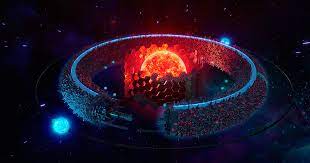
The idea of a Dyson sphere was first proposed by theoretical physicist Freeman Dyson in 1960. A Dyson sphere is envisioned as a massive structure built around a star or black hole to capture a significant portion of its power output in the form of radiation. The concept can take various forms, such as giant cage-like structures, ring shells, or constellations of mirrors. While entirely theoretical, the existence of such megastructures could be indicated by the immense infrared radiation they would emit as the star heats them.
Recent Findings and Methodology
In a recent study published in the journal Monthly Notices of the Royal Astronomical Society, a team of researchers developed a computer program to search for "infrared excess emissions" (IEEs) in our galaxy. These emissions could signify the presence of a Dyson sphere. The researchers utilized data from the European Space Agency's Gaia satellite and additional infrared survey results from other ground- and space-based telescopes.
The analysis led to the identification of seven M-dwarf stars as strong candidates. M-dwarfs are smaller and dimmer than our Sun, making them interesting subjects for this type of investigation. Despite the exciting potential of these findings, the researchers caution against jumping to conclusions. They emphasize that these stars are merely candidates and that there are several natural phenomena that could also explain the observed infrared excess.
Natural Explanations and Scientific Caution
David Hogg, a coauthor of the study and physics professor at New York University, highlights that while the findings are intriguing, natural explanations are more likely. For instance, the infrared excess could result from a rare event, such as the collision of two planets producing a large amount of material. The researchers underscore that it is "definitely premature to presume" that the infrared readings are due to Dyson spheres.
However, the possibility remains open. The researchers plan to use NASA's James Webb Space Telescope, known for its exceptional sensitivity, to further investigate these candidates. The goal is either to rule out the presence of Dyson spheres definitively or to keep these stars on the list for further study.
The Role of Advanced Telescopes
The James Webb Space Telescope (JWST) could play a crucial role in this investigation. With its advanced capabilities, the JWST can provide more detailed observations that may either confirm or dismiss the presence of Dyson spheres. This next step in the research could significantly advance our understanding of these mysterious infrared emissions.
The Broader Implications
The identification of these seven star systems not only fuels our curiosity about potential alien civilizations but also enhances our understanding of infrared emissions and other astronomical phenomena. Even if these findings do not lead to the discovery of Dyson spheres, the research contributes valuable data to the field of astronomy.
The Search for Extraterrestrial Intelligence
This study is part of a broader effort to search for extraterrestrial intelligence (SETI). The possibility of discovering advanced alien civilizations has long fascinated scientists and the public alike. The search involves looking for signs of advanced technology or other indicators of intelligent life beyond Earth. The identification of these star systems as potential hosts for Dyson spheres adds a new dimension to this quest.
Future Prospects and Ongoing Research
The researchers involved in this study plan to continue their investigations, leveraging the capabilities of the JWST and other advanced instruments. Their work represents a step forward in the search for extraterrestrial life and the exploration of our galaxy. Whether or not Dyson spheres are discovered, this research will undoubtedly yield important insights into the universe and our place within it.
Conclusion: A Step Toward Unveiling Cosmic Mysteries
In conclusion, the identification of seven star systems as potential hosts for Dyson spheres is a significant development in the field of astronomy and the search for extraterrestrial intelligence. While the findings are preliminary and require further investigation, they open up exciting possibilities for future research. The use of advanced telescopes like the JWST will be crucial in determining the nature of these infrared emissions. As scientists continue to explore these intriguing candidates, we move one step closer to understanding the vast and mysterious universe we inhabit.




No comments:
Post a Comment